
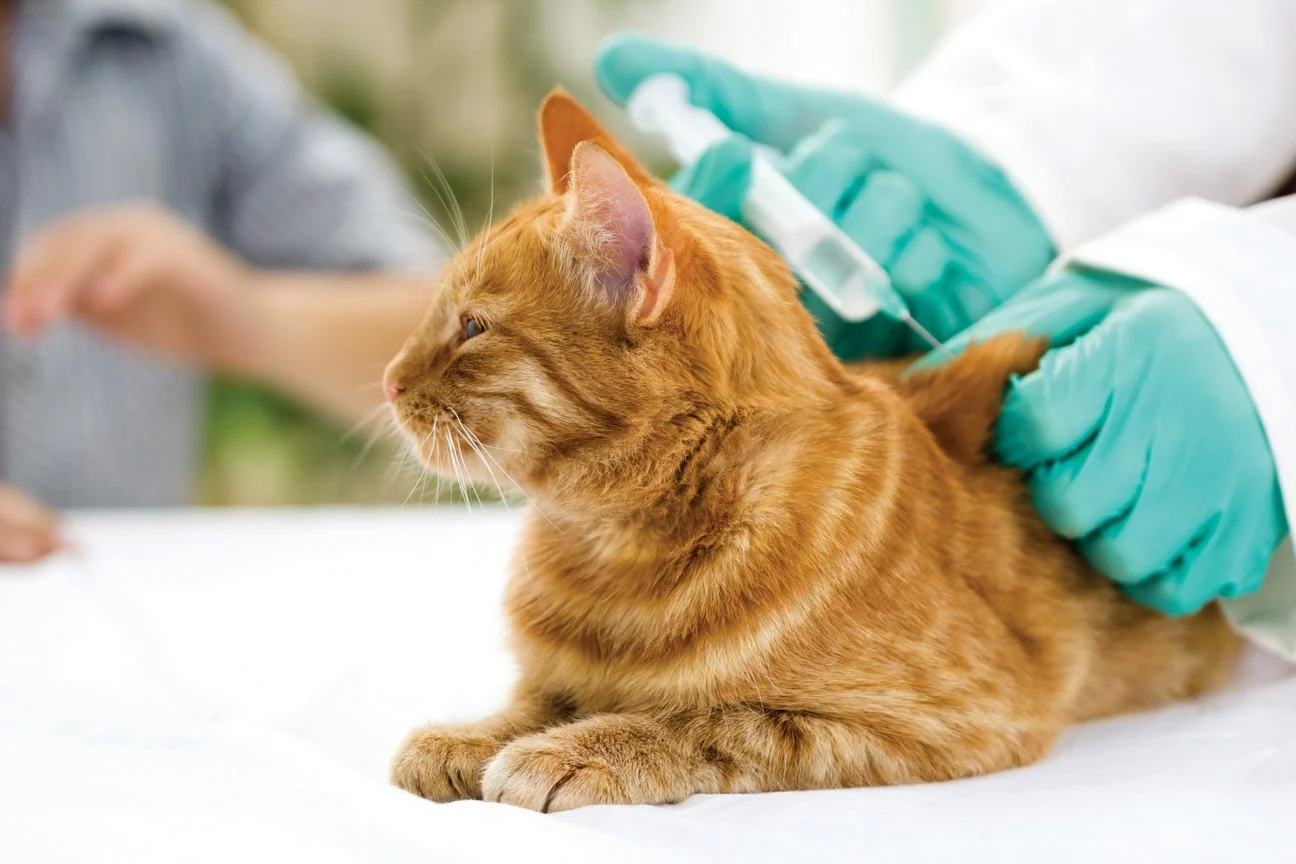
Help Your Pet Fight Disease Before It Starts
Your pet is family, and you want them to live a long, strong and healthy life. Vaccines are a core part of any pet health plan because they help animals fight disease before it takes hold and keep the wider pet community safe from infection. At Sarasota Animal Medical Center in Sarasota, FL , we build an individualized vaccination plan for every dog and cat. Below are answers to the questions we hear most often.
Request an AppointmentHow Do Vaccines Work?
A vaccine gives your pet a very low dose of a pathogen so their immune system can “learn” to fight it. When a virus or bacteria enters an animal’s body for the first time, the animal has no immunity. Introducing a small amount of the disease prompts the body to manufacture antibodies, as explained by the American Veterinary Medical Association.
Those antibodies stay in the bloodstream. If your pet later meets that pathogen at full strength, the tools to fight it are already in place.
Will My Pet Be 100 Percent Immune?
It depends on the animal. Some pets develop total immunity after vaccination, and others develop only partial immunity. Pets that don’t receive regular booster shots may lose some or all of their earlier protection.
That’s why “herd immunity” matters. When the whole population susceptible to a disease is vaccinated, the disease can’t find a foothold. Even if an individual pet doesn’t have 100 percent immunity, other animals can’t get infected and pass the disease along.
Unfortunately, recent reports show that not nearly enough animals are getting vaccinated. Keeping your pet current helps change that.
Which Vaccines Does My Pet Need?
Every pet needs “core” vaccines, and some also need “non-core” vaccines.
- Core vaccines for dogs: canine parvovirus, canine distemper, infectious canine hepatitis and rabies.
- Core vaccines for cats: feline panleukopenia, feline calicivirus, feline rhinotracheitis and rabies.
Depending on your individual dog or cat, we may recommend additional vaccines. For example, if your cat is at risk of feline leukemia, we may advise a vaccine to help lower that risk.
Vaccines are a key part of puppy and kitten care, and they stay important at every life stage. We review your pet’s vaccine needs during their wellness exams so protection doesn’t lapse.
Are There Side Effects to Vaccinating?
Usually, no. Most vaccines are safe and well-vetted, and the same ones have been used on dogs and cats for years. Some pets have a bit of mild fever or discomfort from the low dose of the disease they received.
In rare cases, a pet may have a serious allergic reaction. Signs include itching and swelling of the skin and face, vomiting and diarrhea, or difficulty breathing. If you notice any of these, seek veterinary assistance right away.
Other rare risks are also worth knowing about:
- Some pets may develop a life-threatening bleeding disorder several weeks after vaccination. Vaccination has been incriminated as a trigger of immune-mediated hemolytic anemia (IMHA) in dogs and in people.
- Smaller pets have an increased risk of adverse events.
- The chance of an adverse event also increases when multiple vaccines are given at the same time.
At Sarasota Animal Medical Center, we do not recommend vaccinating pets that are immune compromised, such as those with cancer. A vaccine temporarily lowers the immune system as the body responds to it.
What Are Antibody Titers, and Do They Replace Vaccinations?
Antibody titers are blood tests that measure the amount of certain antibodies in the blood. They do not replace a vaccination program. They may help your veterinarian determine whether your pet can reasonably expect to be protected against disease for the time being.
Your veterinarian will recommend an individualized vaccination plan based on your pet’s needs, to help provide a lifetime of infectious disease protection. Vaccines work alongside parasite prevention as part of a complete preventive care plan.
Want to learn more about vaccinating your pet? Get in touch with us at (941) 954-4771.
Pet Vaccine FAQs
Which vaccines are considered core for dogs?
Core vaccines for dogs include canine parvovirus, canine distemper, infectious canine hepatitis and rabies.
Which vaccines are considered core for cats?
Core vaccines for cats include feline panleukopenia, feline calicivirus, feline rhinotracheitis and rabies.
Does my pet need non-core vaccines?
It depends on your individual pet. For example, if your cat is at risk of feline leukemia, your veterinarian may recommend a vaccine to help lower that risk. We’ll review your pet’s needs and build a plan that fits.
Will my pet be fully protected after vaccination?
Some pets develop total immunity and others develop only partial immunity. Pets that miss regular booster shots may lose some or all of their protection. Staying current on boosters and vaccinating the wider pet population both help keep animals safe.
What side effects can vaccines cause?
Most pets have no side effects. Some have mild fever or discomfort. Rarely, a pet may have a serious allergic reaction, with itching, swelling of the skin or face, vomiting, diarrhea or difficulty breathing. If you see any of these signs, seek veterinary assistance right away.
Should an immune compromised pet be vaccinated?
At Sarasota Animal Medical Center, we do not recommend vaccinating pets that are immune compromised, such as those with cancer. A vaccine temporarily lowers the immune system as the pet responds to it.
Do antibody titers replace vaccines?
No. Antibody titers are blood tests that measure certain antibodies. They don’t replace a vaccination program, but they may help your veterinarian determine whether your pet has a reasonable expectation of protection for the time being.
Keep Your Pet Protected This Year
Our team will review your pet’s history and recommend the vaccines that make sense for them. Call (941) 954-4771 or request a visit online to get started.